Epoxy vs. DIY Kits: Why Your Garage Floor Deserves Professional Grade
![[HERO] Epoxy vs. DIY Kits: Why Your Garage Floor Deserves Professional Grade](https://cdn.marblism.com/mCCfJreV5i9.webp)
Select a garage floor coating based on performance metrics and long-term durability. Residential epoxy flooring serves as a protective barrier for concrete substrates. Standard retail DIY kits offer an entry-level solution but lack the chemical engineering required for high-traffic environments. Nebraska Epoxy Floors utilizes industrial-grade materials backed by 25+ years of local experience. Review the technical differences between professional application and store-bought alternatives below.
Surface Preparation Technical Comparison
Surface preparation determines the success of a resinous coating. Adhesion depends on the mechanical bond between the epoxy and the concrete pores.
DIY Method: Acid Etching
Retail kits instruct users to apply a mixture of water and muriatic acid. This chemical reaction aims to clean the surface.
- Limitation: Acid etching only removes surface-level laitance.
- Risk: It does not address deep oil contaminants or sealers.
- Result: The concrete profile remains too smooth for permanent bonding.
Professional Method: Diamond Grinding
Professional installers use planetary diamond grinders to abrade the surface.
- Action: Removes the top layer of concrete to expose the aggregate.
- Profile: Creates a Concrete Surface Profile (CSP) of 2 or 3.
- Utility: Ensures the epoxy penetrates the substrate rather than sitting on top.

Material Chemistry and Solids Content
The chemical composition of the resin dictates the lifespan of the floor. Compare the percentage of solids in the product to understand the final dry film thickness.
Water-Based DIY Epoxy
Most kits sold at big-box retailers are water-based or solvent-based.
- Solids Content: Typically 40% to 50%.
- Evaporation: As the coating cures, the water/solvent evaporates.
- Shrinkage: A 10-mil wet application results in a 4-mil or 5-mil dry layer.
- Durability: Thin layers are susceptible to scratching and impact damage.
100% Solids Professional Epoxy
Nebraska Epoxy Floors utilizes 100% solids resinous systems.
- Solids Content: 100%.
- Evaporation: Zero evaporation occurs during the curing process.
- Thickness: The thickness applied while wet is the exact thickness when cured.
- Performance: Provides a high-build, impact-resistant surface.

Dry Film Thickness (DFT) Standards
Thickness correlates directly with the protection of the underlying concrete. Standard residential epoxy flooring must withstand vehicle weight and tool drops.
- DIY Kits: Total dry film thickness usually averages 3 to 5 mils. This is comparable to a few layers of heavy-duty paint.
- Professional Systems: Total system thickness typically ranges from 15 to 30 mils.
- Impact: Professional systems provide 3x to 6x the material volume of a DIY kit.
Common Failure Points in DIY Installations
Inadequate materials and preparation lead to specific structural failures. These issues often appear within the first 12 to 24 months of application.
Hot-Tire Pickup
Vehicles enter the garage with heated tires. The heat softens low-quality DIY resins. As the tires cool, they contract and bond to the coating. When the vehicle moves, the epoxy peels off the concrete and sticks to the tire. 100% solids epoxy is chemically cross-linked to prevent this thermoplastic reaction.
Delamination and Peeling
Peeling occurs when the bond between the epoxy and concrete fails. This is a result of moisture vapor transmission or poor surface profile. Professional installation includes moisture testing and mechanical grinding to prevent delamination.
Chemical Sensitivity
Garage floors encounter motor oil, brake fluid, and road salt. DIY kits frequently stain or soften when exposed to these chemicals. Professional topcoats, such as polyurea or polyurethane, provide high chemical resistance.

The Reality of Epoxy Garage Floor Cost
Analyze the financial investment over a 15-year period.
- DIY Initial Cost: Approximately $1.00 to $2.00 per square foot.
- DIY Lifecycle: Requires re-application every 2 to 4 years. Total 15-year cost includes multiple kits and the labor to strip failed coatings.
- Professional Initial Cost: Contact Nebraska Epoxy Floors for current market pricing.
- Professional Lifecycle: Lasts 15+ years with minimal maintenance.
- Economic Value: The professional option provides a lower “cost per year” and increases property resale value.
Aesthetics and Safety Features
Visual appeal and slip resistance are functional requirements for a modern garage.
Flake Density
DIY kits provide a small bag of decorative flakes for “speckling” the floor. This is purely aesthetic. Professional systems use a “full broadcast to refusal” method. The entire wet base coat is covered in vinyl flakes until no more can be absorbed.
- Benefit: Creates a uniform texture.
- Benefit: Increases the structural thickness of the floor.
Slip Resistance
A smooth DIY floor becomes hazardous when wet. Professional installers add anti-skid aggregates (aluminum oxide or glass beads) into the topcoat. This ensures a safe walking surface in Nebraska’s snowy and rainy conditions.

Installation Timeline and Process Efficiency
A professional installation follows a strict industrial sequence to ensure quality control.
- Substrate Assessment: Testing for moisture and existing sealers.
- Diamond Grinding: Mechanical abrasion for pore opening.
- Crack Repair: Using epoxy crack fillers to level the surface.
- Base Coat Application: High-solids epoxy for deep penetration.
- Broadcast: Full flake distribution for texture and color.
- Recovery: Reclaiming excess flakes and scraping the surface smooth.
- Topcoat Sealant: Applying a UV-stable, chemical-resistant finish.
DIY projects often span multiple weekends due to drying times and the need for additional equipment rentals. Professional crews typically complete the process in 1 to 2 days, allowing for vehicle traffic shortly after.
Why Local Experience Matters in Nebraska
The Omaha climate presents unique challenges for residential epoxy flooring.
- Freeze-Thaw Cycles: Concrete expands and contracts. Professional materials have the tensile strength to move with the substrate.
- Road Salt: Winter de-icing agents are corrosive. Industrial topcoats prevent salt from reaching and pitting the concrete.
- Experience: With 25+ years in the local industry, Nebraska Epoxy Floors understands the specific concrete mixes and environmental factors of the region.
Maintenance Requirements
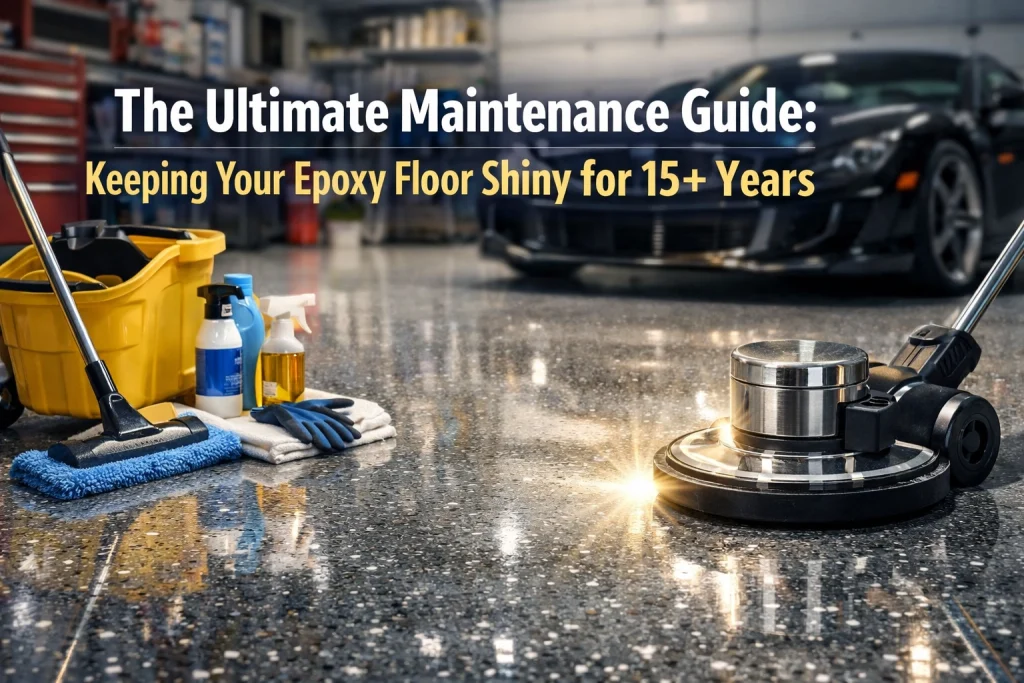
Maintain professional epoxy floors with basic cleaning protocols.
- Daily: Dust mop or leaf blow to remove debris.
- Weekly: Mop with a mixture of water and ammonia (4-5 ounces per gallon).
- Avoid: Do not use citrus-based cleaners or vinegar, as acids can dull the finish over time.
- Avoid: Do not use soap-based cleaners that leave a film, making the floor slippery.
A garage floor is an extension of the home’s living space and a protection for its foundation. While DIY kits offer a low entry price, they lack the thickness, adhesion, and chemical resistance of professional systems. Choosing a professional epoxy flooring contractor in Omaha ensures a permanent solution that resists hot-tire pickup, peeling, and chemical staining.
Review our blog for more information on flooring technology or visit our about us page to learn about our history in the Nebraska community.
Contact Nebraska Epoxy Floors
For a technical consultation and accurate estimate:
- Website: epoxyfloorsomaha.com
- Specialties: Garage, basement, and commercial floor coatings.